SaySpark is still in development and not yet released — check back soon.

About SaySpark

Robotics education should be as simple as a conversation.

Our mission is to put a patient AI tutor and a real, hands-on robot in front of every kid — so learning to think like an engineer starts with talking, not with a toolchain.

Where it started

Kids were becoming spectators, not problem-solvers.

For three years, founder Ahmad Ali volunteered as a robotics mentor in elementary schools around Windsor, Ontario. The kids loved robotics — the live demos, the competitions, the “aha” when something finally works. But they were too young to write embedded C++, so the mentors ended up doing the programming. The students got to watch robots move — and missed the part that makes robotics meaningful: forming a strategy, testing it, failing, and trying again.

How can I teach robotics without requiring kids to learn programming first?

That question became SaySpark. The first robot was hand-built in early 2026, then rebuilt around the answer: a robot you talk to. A student can say “I think the right-hand rule will solve this maze — can you try it?” and watch their own strategy run on real wheels.
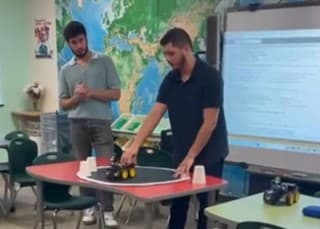
Mentors demonstrating a wheeled robot on a classroom table while students watch
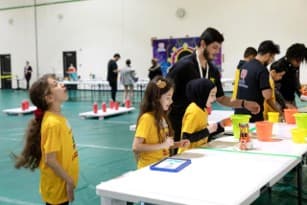
Students at a school robotics competition event

Our progress

Six months, six hundred commits.

We build in fast, honest iterations — every milestone below is something the robot really does, not a slide from a pitch deck.

Feb 2026
The first marker bot
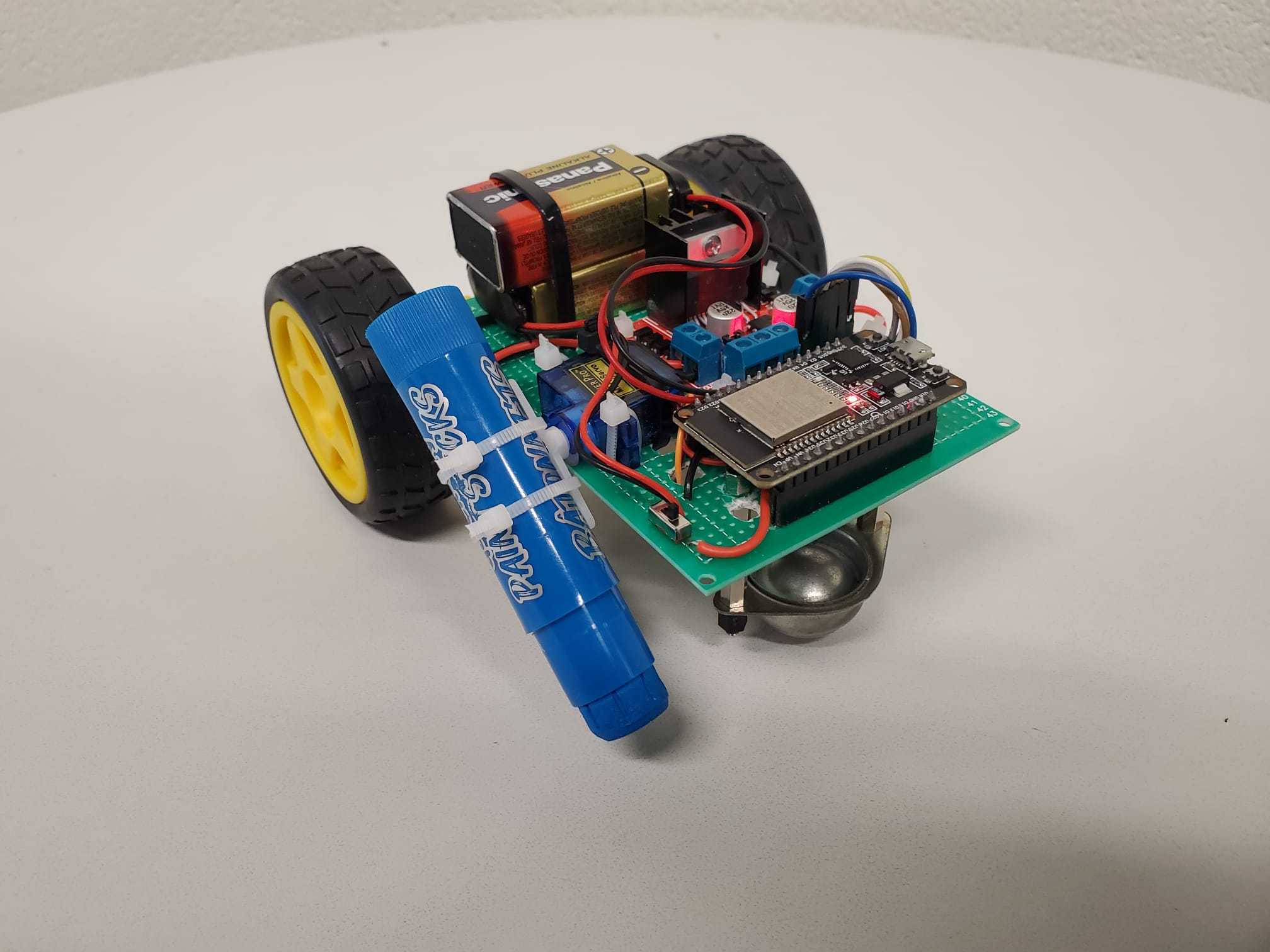
SaySpark starts life as “SaySpark” — a hand-wired perfboard robot with a 9-volt battery, a bare ESP32, and a marker zip-tied to a servo. It could drive on paper and draw. That was the whole product.
The first SaySpark prototype: perfboard, 9-volt battery, ESP32, and a blue marker zip-tied to a servo
Apr 2026
A real chassis and computer vision
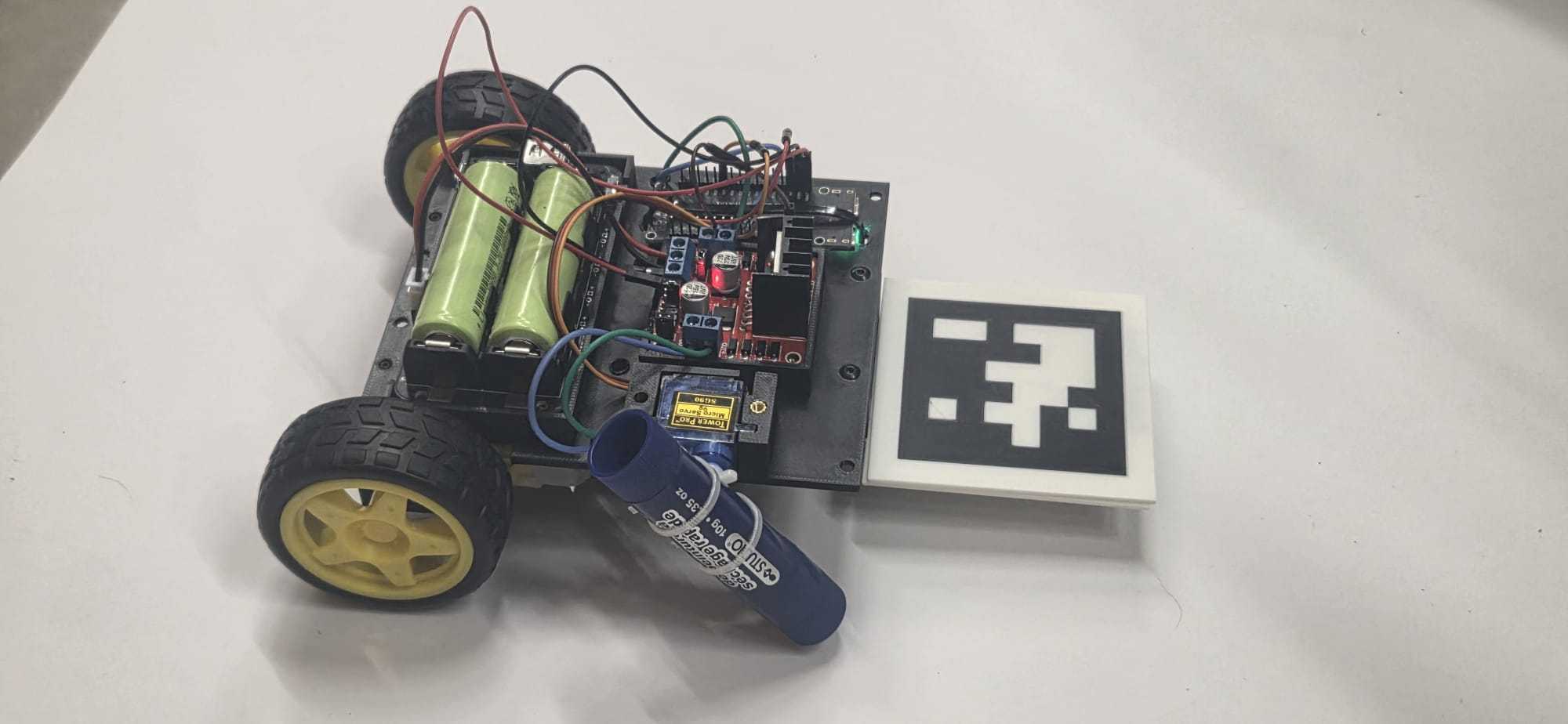
The monorepo is born. A 3D-printed chassis replaces the perfboard, and the robot gains camera vision with AprilTag localization plus a desktop control app.
Second-generation SaySpark: 3D-printed chassis with 18650 batteries, marker servo, and an AprilTag
Jun 2026
The robot learns to talk — and solve
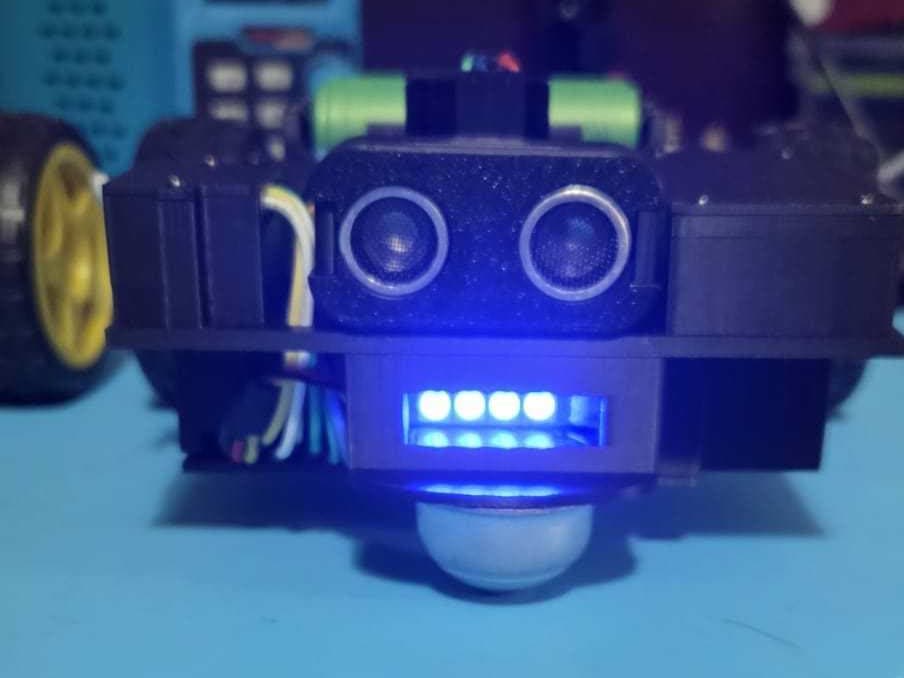
The pivot that defined the product: a robot you talk to. An on-board microphone and speaker connect kids straight to the AI tutor, and Spark Mini starts solving mazes it has never seen — narrating every decision out loud.
Spark Mini today: ultrasonic-sensor eyes and glowing LED mouth on a 3D-printed face
Jul 2026
From dev board to real product
One-minute Bluetooth Wi-Fi setup, a self-serve calibration tuner, and our first custom circuit board — the step from hand-wired prototype toward hardware a classroom can actually own.

What we believe

The principles we build by.

Conversation first
The interface for a six-year-old and a sixteen-year-old is the same: talking. Reading menus, dragging blocks, and installing toolchains are optional — never the price of entry.
Real engineering, shown honestly
We market what ships. When the robot narrates a maze run, that is the actual algorithm speaking — not a scripted demo. Kids deserve technology that is exactly what it claims to be.
Patience is the product
A great tutor never sighs, never rushes, and never gives the answer away. Spark coaches students to break problems into steps — sense, decide, move — at whatever pace the student sets.

Who's building this

Founder-built, end to end.

SaySpark is built by Ahmad Ali — one founder writing everything from the motor control firmware and the custom circuit board to the AI tutor, the mobile app, and this website. That vertical view is deliberate: when the same hands shape the hardware and the lesson, the product stays coherent.

It draws on years of building — science fairs, hackathons, and research, including a machine-learning glove that translates American Sign Language into audible speech and an autonomous indoor drone that won the IEEE PIMRC 2023 Demo Competition.

Get in touch
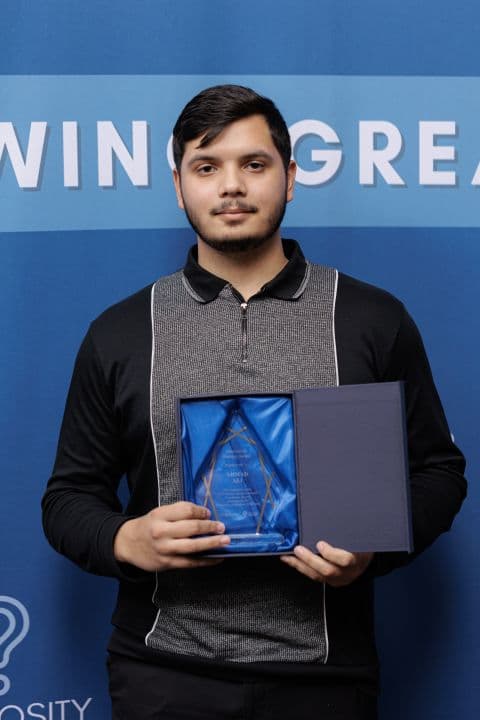
Ahmad Ali, founder of SaySpark, holding an engineering award

Where this goes

Spark Mini is robot number one — not the last.

The long-term bet is a family of classroom robots, all taught by the same voice. Follow along, or put a Spark Mini in front of a kid and watch what happens.

Start for freeJoin the waitlist